
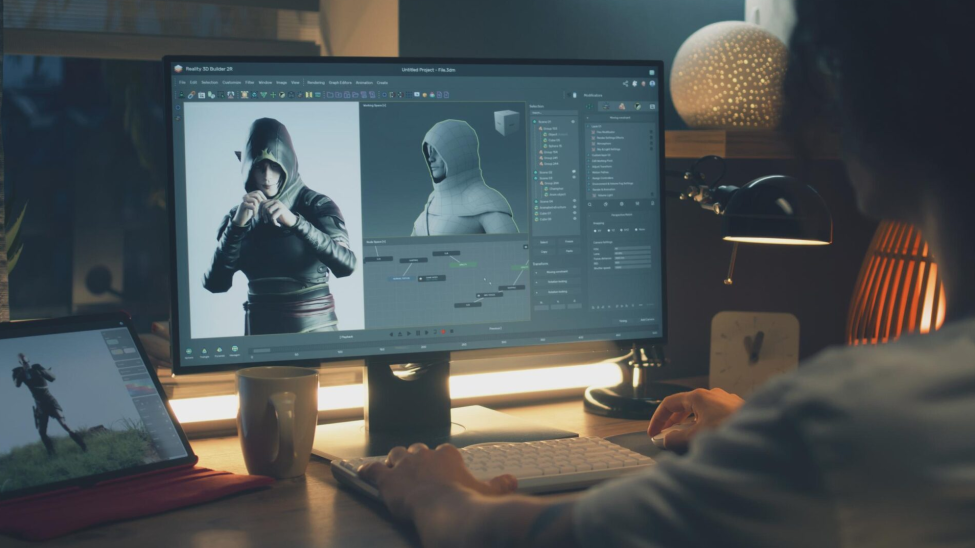
How a Video Game Is Created: A Basic Explanation of the Development Process in 2026
Ever finished a game and wondered how it actually got made? How does an idea in someone’s head become a 60-hour open world with millions of players around the globe? The truth is that even the simplest mobile game involves a surprising amount of coordination between programmers, artists, designers, writers, composers, and testers — and blockbuster titles like Grand Theft Auto V reportedly cost $137 million just to develop, plus another $128 million to market. That’s an entire small city working together for years, all so you can spend 40 hours in Los Santos causing chaos.
But you don’t need to be a game developer to understand how it all works. The process, while complex, follows a predictable structure that every game — from a solo indie project to the biggest AAA blockbuster — moves through. Below is a plain-English breakdown of the game development process in 2026, from the initial idea to the day a game launches on Steam or the PS Store. Whether you’re curious about the industry, considering a career in it, or just want to understand what all those closing credits actually do, this guide will show you how the games you love actually come to life.
The Big Picture: Three Main Phases
Almost every game — regardless of size — moves through three main phases: pre-production (planning), production (building), and post-production (releasing and maintaining). Think of it like making a movie. You don’t just start filming; you write the script first, plan the scenes, hire actors, then shoot, edit, and eventually release the finished product. Games work the same way, just with a lot more code and a longer timeline. A commercial game typically takes 2-5 years from start to finish; some AAA titles take a decade.
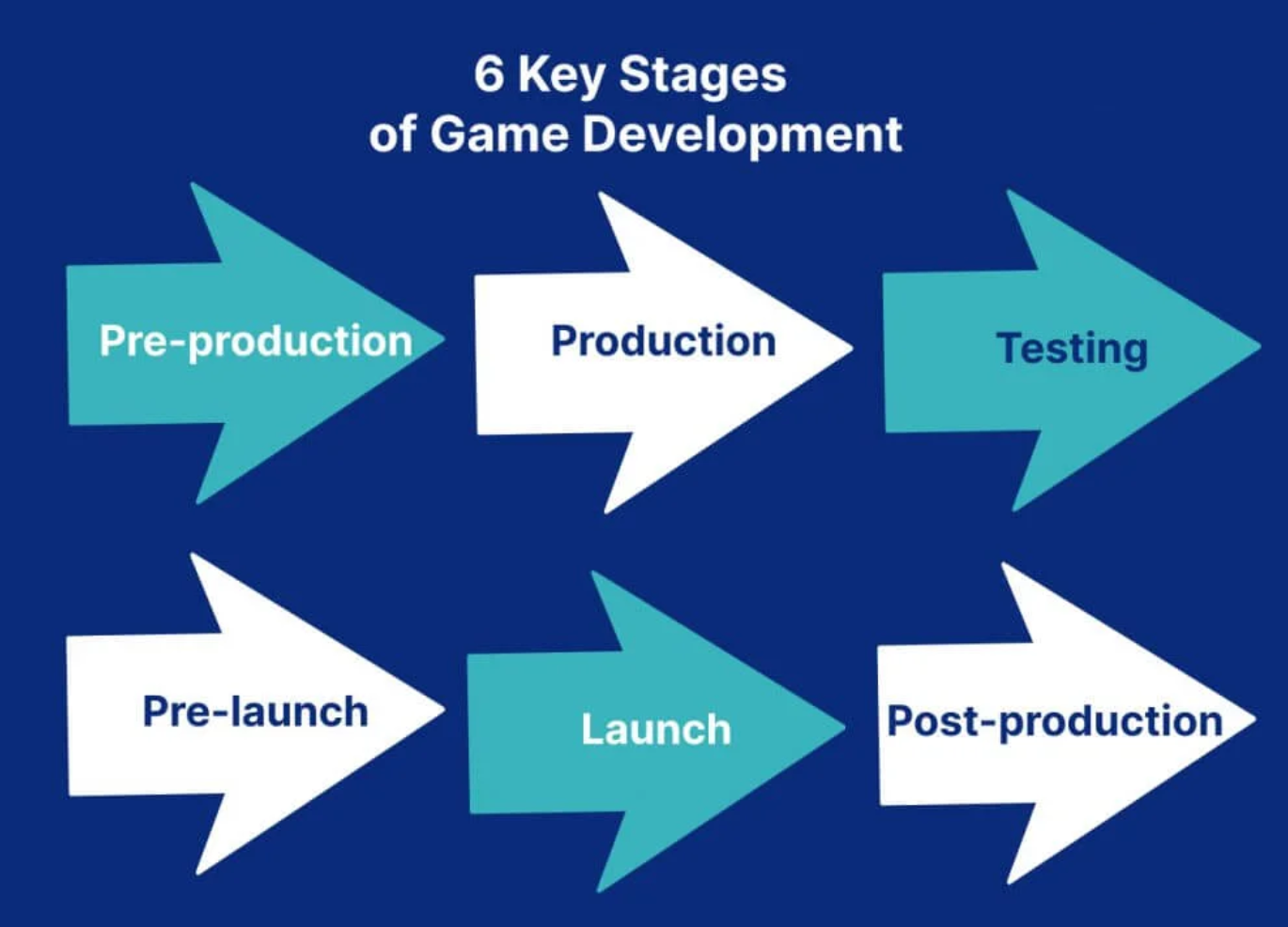
Now let’s break down what actually happens inside each phase.
Phase 1: Pre-Production — Turning an Idea Into a Plan
Pre-production is where everything starts. Someone — an individual developer, a creative director, or a small team — has an idea. Maybe it’s “a platformer about a foul-mouthed squirrel” (that’s actually how Conker’s Bad Fur Day started). Maybe it’s “a survival game where you build a fortress at night.” The idea itself is easy; the hard part is figuring out whether it’s actually worth making.
During pre-production, the team answers foundational questions: What kind of game is it? Who is it for? How will it make money — full-price purchase, free-to-play with microtransactions, subscription? How long will it take to build, and how many people will it need? What platforms will it release on? Pre-production typically takes anywhere from a few weeks to a full year and usually consumes about 20% of the total project timeline.
The most important output of this phase is the Game Design Document (GDD) — sometimes called the game’s “north star.” It’s a detailed blueprint that describes everything about the game: the story, the mechanics, the characters, the art style, the audio direction, the target audience, even the marketing strategy. It’s a living document that gets updated constantly throughout development. Every artist, programmer, and designer works from the GDD to make sure everyone’s building the same game.
Teams also produce early prototypes during this phase — rough, sometimes ugly playable versions that test whether the core idea actually works. Studios often build multiple prototypes, refining based on what feels fun and cutting what doesn’t. Publishers frequently expect a playable prototype and a “vertical slice” (a fully polished sample lasting a few minutes to half an hour) before they’ll approve full funding for the project.
Phase 2: Production — Building the Actual Game
Production is where the game genuinely gets built. This is the longest and most resource-intensive phase — sometimes 60-70% of the total development time. It’s where the studio scales up, hires the full team, and starts turning the design document into actual code, art, and audio.
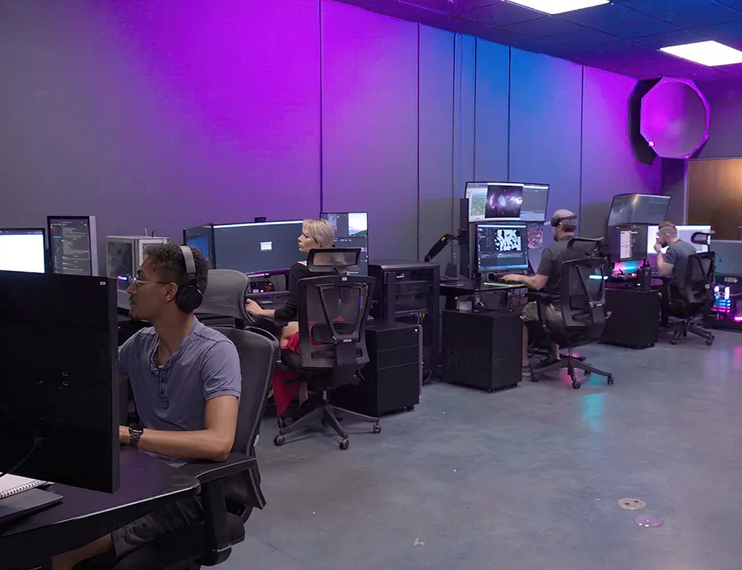
Multiple teams work simultaneously during production, each handling a different part of the game.
Programmers write the code that makes everything work — the movement, the physics, the AI, the menu systems, the multiplayer network, and countless other invisible systems. In modern game development, most studios build their games using established game engines like Unity or Unreal Engine 5, which provide pre-built tools for rendering graphics, handling physics, and managing assets. This saves years of development time compared to building an engine from scratch. Some larger studios (Rockstar, id Software, EA’s Frostbite team) still use proprietary engines built in-house.
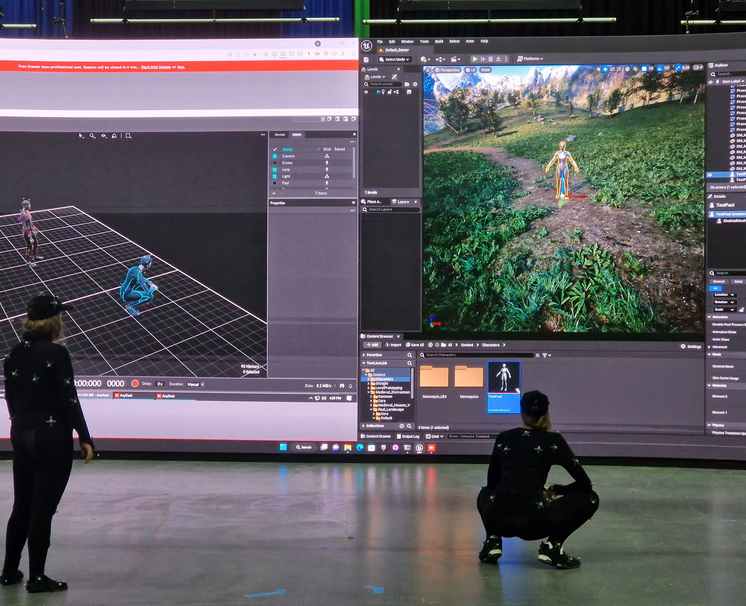
Artists create everything visual. 3D modelers build the characters, environments, weapons, and props. Texture artists add surface detail. Animators bring characters to life with motion capture and hand-keyed animation. Concept artists sketch new ideas as they emerge. VFX artists create explosions, magic effects, and particle systems. For a game like Cyberpunk 2077, the art team alone can involve hundreds of people.
Level designers craft the actual places you play in — the maps, dungeons, cities, worlds. They decide where enemies spawn, where cover exists, what puzzles you’ll encounter, and how the space guides you through the story. Good level design is invisible; you just naturally move through it and have fun. Bad level design leaves you lost or frustrated.
Writers create the story, dialogue, character backstories, item descriptions, and lore. In dialogue-heavy games like RPGs, writing teams can produce more words than most novels. They collaborate constantly with designers and artists to keep the story and gameplay aligned.
Sound designers and composers create everything you hear — footsteps, gunshots, ambient noise, character voice acting, and the musical score. Audio is one of the most underrated parts of game development, but bad audio can make an otherwise great game feel amateur.
Producers and project managers coordinate the whole operation, managing schedules, budgets, hiring, and keeping every team on the same page. They’re the traffic controllers making sure nothing collides.
Throughout production, the game hits milestones: alpha (all core features implemented but rough), beta (all content complete but buggy), and release candidate (theoretically ready to ship). Between each milestone, the team is constantly testing, refining, and cutting content that doesn’t work.
The Rise of AI in Game Development
One major shift in 2026: AI tools have become a routine part of the game development pipeline. Studios use AI for procedural content generation (building large environments faster), texture and asset upscaling, playtesting simulations, dialogue variation, animation cleanup, and even QA testing. AI hasn’t replaced human developers, but it’s dramatically accelerated the work — small indie teams can now produce games that would have required 30-person studios five years ago. Larger studios use AI to handle repetitive tasks so their human designers can focus on the creative work that machines can’t replicate: game feel, emotional storytelling, and cultural resonance.
Phase 3: Post-Production — Launch and Beyond
Post-production covers everything from the final polish before launch through years of ongoing support after release. Modern games are rarely “finished” the way they used to be. A game released in 2026 typically continues receiving updates, patches, DLC, and new content for years afterward.
Just before launch, the team goes through QA (quality assurance) testing at maximum intensity. Professional game testers play the game for thousands of hours, documenting every bug, crash, and unbalanced mechanic. They test on every platform the game will release on and try to break the game in every way possible. Testing is one of the most critical stages — a buggy launch can destroy a game’s reputation permanently.
Studios often run closed betas (invited players test early builds) and open betas (anyone can join to stress-test servers and generate marketing buzz) in the final months before release. During beta, the team enforces a “feature freeze” — no new features get added, only bug fixes.
Marketing and PR peak in the weeks leading up to release. Trailers drop, review copies go out to press and streamers, and community events build hype. Launch day itself involves close monitoring of server performance, quick response to any critical bugs, and constant communication with players.
After launch, the game enters what studios now call LiveOps (live operations) — the ongoing life of the game post-release. This includes bug fixes, balance patches, new content (DLC), free updates, in-game events, cosmetic sales, and eventually major expansions. Games like Fortnite, World of Warcraft, and Final Fantasy XIV have entire teams dedicated to LiveOps years after their original release.
The Reality: It’s Messy, Chaotic, and Rewarding
For all the structure described above, game development is fundamentally messy work. Features get cut. Deadlines slip. Ideas that sounded amazing in the GDD turn out to be terrible in practice. Studios sometimes ship games with known bugs because they’ve run out of time or money. “Crunch” — extreme overtime during the final months of development — has been a controversial industry norm for decades, though 2026 has seen genuine reform in many studios.
But when it works — when the code, the art, the audio, the writing, and the design all click together — you get something remarkable: a video game. A thing that didn’t exist before. A world that millions of people will step into and remember for years.
Final Summary: The Journey From Idea to Game
Every video game — whether it’s a tiny indie project made by one person in their bedroom or a $200 million blockbuster made by 500 people over five years — travels the same three-phase path. Pre-production turns an idea into a plan and a design document. Production turns that plan into actual code, art, audio, and gameplay through the coordinated work of programmers, artists, designers, writers, and composers. Post-production polishes the game, launches it to the world, and keeps it alive for years afterward through updates, patches, and new content.
Understanding this process gives you a much richer appreciation for the games you play. Behind every enemy AI, every skybox, every dialogue line, and every UI menu is a team of people who made hundreds of small decisions to bring you that specific moment. Games are one of the most collaborative art forms humans have ever created — closer to filmmaking than any other medium, but with the added complexity of code, systems, and player interaction. Next time you finish a great game, stick around for the credits. Every name up there had a hand in the experience you just had.